7 German Insurance Myths, Debunked by a Licensed Broker
By Matthias Wolf, Licensed Insurance Broker (§34d GewO) · Last reviewed: May 2026
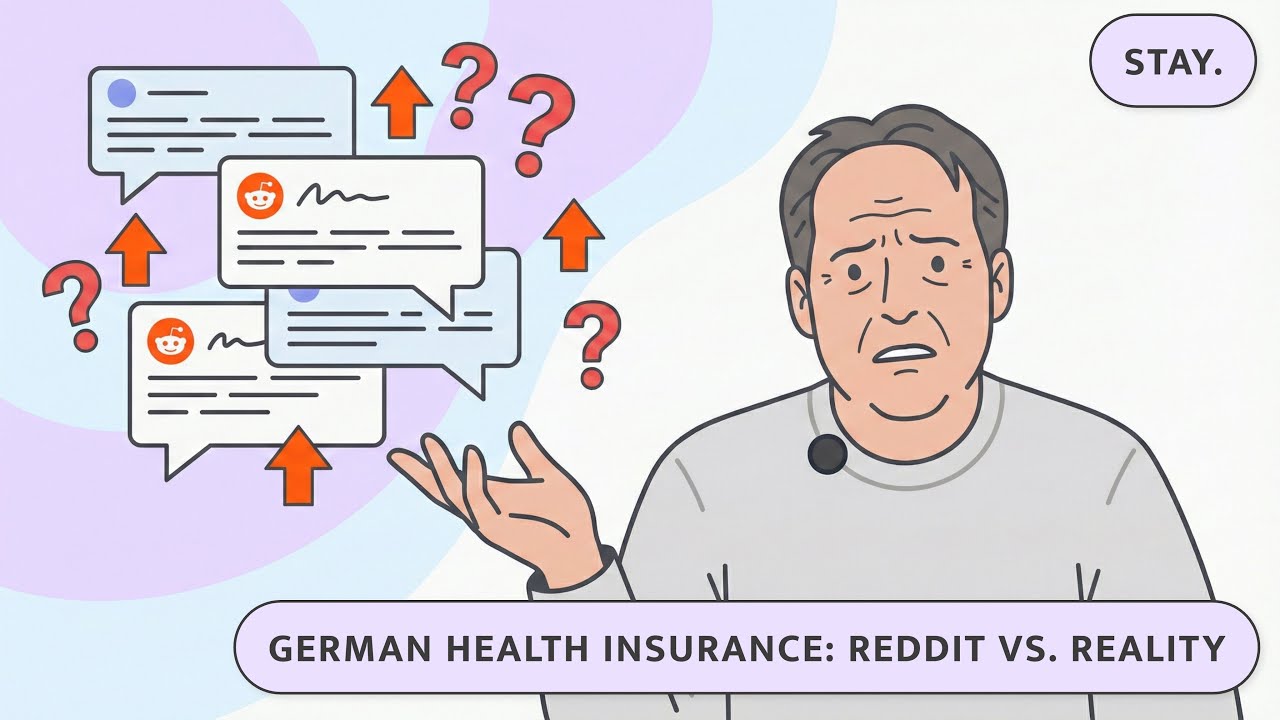
Most of the German-insurance advice on Reddit and expat forums is well-meaning and wrong — and in insurance, wrong advice gets expensive. Below, a licensed broker debunks the seven myths we see cost international residents the most: from "I'll get dental cover when I need it" to "I can always switch back to public insurance later." Each comes with a clear verdict and the facts behind it.
Myth 1 — "I'll get dental insurance once I have a problem" ❌
The reality: insurance covers the unforeseen. You can't insure a house that's already on fire — and you can't get supplementary dental cover (Zahnzusatzversicherung) to pay for treatment that's already been recommended. Once damage is documented, most providers exclude it, and they'll check: insurers can ask to see your medical record (kept for 10 years in Germany), so hiding it doesn't work. A few providers will insure existing damage, but at a high premium and covering only a fraction of the cost.
The numbers are real: one of our own team had a single tooth replaced for €4,042 — and on public insurance, €3,400 of that was out of pocket, because GKV covers only the basics (50–65%). The move is to add supplementary dental cover while your teeth are healthy — not when the dentist hands you the quote.
Myth 2 — "My travel or expat plan is enough for my visa" ❌
The reality: travel and international "expat" plans (the well-known worldwide-care products) often work for your first visa, but they are not compliant for renewal. German-compliant cover must include nursing care and carry no limitations (no caps on time, money, or treatment). At renewal, the Ausländerbehörde rejects non-compliant plans — and gaps trigger back-penalties. Sort compliant cover before you renew, not after you're rejected.
Myth 3 — "As a freelancer, my insurance costs are predictable" ❌
The reality: in your first year, public insurance (GKV) lets you declare a low income and pay a small contribution — but after your first tax return, it back-bills the difference. People regularly face a surprise catch-up bill they didn't budget for. And gaps in compliant cover bring fines on top. Plan for your real income from day one. (More in our freelancer health insurance guide.)
Myth 4 — "A pre-existing condition means I can't get private insurance" ⚠️
Half-true. A private insurer can decline you or add a surcharge for a serious condition — but that doesn't mean you're stuck. Routes exist: public insurance (GKV) must take you if you're eligible, and every private insurer must offer the Basistarif (~€850/month, GKV-level cover) regardless of health.
The dangerous version of this myth is the opposite: thinking you should hide a condition to get a better rate. Don't. German insurers can rescind the contract if you omit something on the health questions — leaving you uninsured exactly when you need cover.
There's also a real trap in how you apply. If you apply yourself through a portal and get rejected, that rejection is logged in the industry's central register (Wagnisdatei) under your name — which makes every later application harder. The professional route is an anonymous risk assessment first: a broker checks your acceptance odds without your name attached, so a "no" doesn't follow you around. The fix isn't hiding anything — it's disclosing honestly and applying the right way.
Myth 5 — "Non-EU freelancers simply can't get public insurance" ⚠️
Half-true. If you're a non-EU freelancer (or arrive unemployed), public insurance generally won't let you join voluntarily — so private is normally the only compliant route at first. But there are real, legal workarounds:
- The "mini-job" route — done right. Taking a small employed role makes you compulsorily insured in public insurance, which opens the door a freelancer can't open alone. The catch is the threshold: you need to earn around €600+/month so that the job is subject to social-security contributions. A job genuinely below the mini-job ceiling (up to €603/month in 2026) is exempt from social security and won't trigger it — so aim just over the line, into the social-security-paying (midi-job) zone, to be safe.
- The Künstlersozialkasse (KSK) gives artists, journalists, and musicians subsidised access to statutory health and pension — roughly halving the cost — if you qualify.
So "I can't get public insurance" is often "I haven't found the right route yet."
Myth 6 — "Private insurance is always more expensive for families" ❌
The reality: the cost driver in private insurance isn't the children — it's a non-working partner. Children in private cover are surprisingly affordable (~€150/month for strong coverage, because they don't pay the old-age reserve portion). A stay-at-home partner, on the other hand, needs their own ~€450–500/month policy, whereas public insurance covers them free.
So for dual-income families, private insurance is often still cost-effective and gives better care. It's the single-earner, stay-at-home-partner model where public wins. "Always more expensive for families" is simply wrong.
Myth 7 — "I can always switch back to public insurance later" ❌
The reality — and this is the most consequential myth: returning to public insurance becomes very restricted after age 55. Before 55, you can return if your salary drops below the threshold or you become employed below it. After 55, that door largely closes. This is exactly why the private-vs-public decision needs a long-term view, not a one-year one — and why "I'll just switch back if it gets expensive" is a plan that can quietly expire on your 55th birthday. (More in our switching mistakes guide.)
Why these myths spread
Most of this advice circulates on Reddit and expat forums, shared in good faith by people describing their situation — which may be nothing like yours.
"Health insurance is one of the biggest financial decisions you make in Germany, and the worst place to get advice on it is an anonymous forum thread. The rules turn on your residency status, age, health, family, and income — change one and the right answer changes too." — Matthias Wolf, Licensed Insurance Broker (§34d GewO)
For the bigger picture, see our PKV vs GKV comparison and why German health insurance is so expensive.
Educational information, not individual insurance, financial, or tax advice. Thresholds and rules change, and the midi-job and KSK routes depend on your circumstances. Figures are rounded and as of 2026. Reviewed by Matthias Wolf, licensed insurance broker (§34d GewO).